Kamis, 27 Mei 2010

[H829.Ebook] Free Ebook At the Existentialist Caf�: Freedom, Being, and Apricot Cocktails with Jean-Paul Sartre, Simone de Beauvoir, Albert Camus, Martin He

Free Ebook At the Existentialist Caf�: Freedom, Being, and Apricot Cocktails with Jean-Paul Sartre, Simone de Beauvoir, Albert Camus, Martin He

Well, book At The Existentialist Caf�: Freedom, Being, And Apricot Cocktails With Jean-Paul Sartre, Simone De Beauvoir, Albert Camus, Martin He will certainly make you closer to just what you want. This At The Existentialist Caf�: Freedom, Being, And Apricot Cocktails With Jean-Paul Sartre, Simone De Beauvoir, Albert Camus, Martin He will be consistently excellent friend at any time. You could not forcedly to constantly complete over checking out an e-book simply put time. It will certainly be simply when you have extra time and also investing few time to make you feel pleasure with what you review. So, you can obtain the meaning of the notification from each sentence in the e-book.
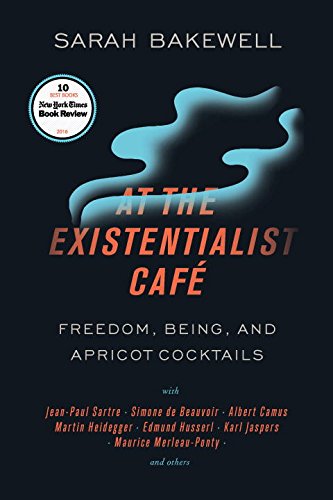
At the Existentialist Caf�: Freedom, Being, and Apricot Cocktails with Jean-Paul Sartre, Simone de Beauvoir, Albert Camus, Martin He

At the Existentialist Caf�: Freedom, Being, and Apricot Cocktails with Jean-Paul Sartre, Simone de Beauvoir, Albert Camus, Martin He


At the Existentialist Caf�: Freedom, Being, and Apricot Cocktails with Jean-Paul Sartre, Simone de Beauvoir, Albert Camus, Martin He

Free Ebook At the Existentialist Caf�: Freedom, Being, and Apricot Cocktails with Jean-Paul Sartre, Simone de Beauvoir, Albert Camus, Martin He

Excellent At The Existentialist Caf�: Freedom, Being, And Apricot Cocktails With Jean-Paul Sartre, Simone De Beauvoir, Albert Camus, Martin He publication is constantly being the best pal for investing little time in your workplace, night time, bus, as well as anywhere. It will certainly be an excellent way to just look, open, and also check out the book At The Existentialist Caf�: Freedom, Being, And Apricot Cocktails With Jean-Paul Sartre, Simone De Beauvoir, Albert Camus, Martin He while because time. As known, experience and skill do not constantly had the much money to obtain them. Reading this publication with the title At The Existentialist Caf�: Freedom, Being, And Apricot Cocktails With Jean-Paul Sartre, Simone De Beauvoir, Albert Camus, Martin He will allow you recognize a lot more things.

The benefits to take for reading the books At The Existentialist Caf�: Freedom, Being, And Apricot Cocktails With Jean-Paul Sartre, Simone De Beauvoir, Albert Camus, Martin He are concerning enhance your life quality. The life top quality will certainly not simply regarding the amount of expertise you will acquire. Even you read the fun or enjoyable publications, it will aid you to have enhancing life quality. Really feeling enjoyable will certainly lead you to do something flawlessly. Furthermore, the publication At The Existentialist Caf�: Freedom, Being, And Apricot Cocktails With Jean-Paul Sartre, Simone De Beauvoir, Albert Camus, Martin He will give you the lesson to take as an excellent need to do something. You may not be ineffective when reviewing this publication At The Existentialist Caf�: Freedom, Being, And Apricot Cocktails With Jean-Paul Sartre, Simone De Beauvoir, Albert Camus, Martin He

Don't bother if you do not have adequate time to head to the publication store and look for the favourite e-book to review. Nowadays, the on the internet publication At The Existentialist Caf�: Freedom, Being, And Apricot Cocktails With Jean-Paul Sartre, Simone De Beauvoir, Albert Camus, Martin He is involving provide convenience of reviewing behavior. You could not need to go outside to look the e-book At The Existentialist Caf�: Freedom, Being, And Apricot Cocktails With Jean-Paul Sartre, Simone De Beauvoir, Albert Camus, Martin He Searching as well as downloading the book qualify At The Existentialist Caf�: Freedom, Being, And Apricot Cocktails With Jean-Paul Sartre, Simone De Beauvoir, Albert Camus, Martin He in this short article will offer you far better remedy. Yeah, on-line e-book At The Existentialist Caf�: Freedom, Being, And Apricot Cocktails With Jean-Paul Sartre, Simone De Beauvoir, Albert Camus, Martin He is a kind of digital e-book that you could enter the link download offered.

Why ought to be this on the internet publication At The Existentialist Caf�: Freedom, Being, And Apricot Cocktails With Jean-Paul Sartre, Simone De Beauvoir, Albert Camus, Martin He You may not should go someplace to check out guides. You can read this book At The Existentialist Caf�: Freedom, Being, And Apricot Cocktails With Jean-Paul Sartre, Simone De Beauvoir, Albert Camus, Martin He every time as well as every where you desire. Even it is in our extra time or feeling bored of the works in the office, this is right for you. Get this At The Existentialist Caf�: Freedom, Being, And Apricot Cocktails With Jean-Paul Sartre, Simone De Beauvoir, Albert Camus, Martin He right now and also be the quickest person which completes reading this book At The Existentialist Caf�: Freedom, Being, And Apricot Cocktails With Jean-Paul Sartre, Simone De Beauvoir, Albert Camus, Martin He

At the Existentialist Caf�: Freedom, Being, and Apricot Cocktails with Jean-Paul Sartre, Simone de Beauvoir, Albert Camus, Martin He

Named one of the Ten Best Books of 2016 by the New York Times, a spirited account of a major intellectual movement of the twentieth century and the revolutionary thinkers who came to shape it, by the best-selling author of How to Live Sarah Bakewell.

Paris, 1933: three contemporaries meet over apricot cocktails at the Bec-de-Gaz bar on the rue Montparnasse. They are the young Jean-Paul Sartre, Simone de Beauvoir, and longtime friend Raymond Aron, a fellow philosopher who raves to them about a new conceptual framework from Berlin called Phenomenology. "You see," he says, "if you are a phenomenologist you can talk about this cocktail and make philosophy out of it!"
     It was this simple phrase that would ignite a movement, inspiring Sartre to integrate Phenomenology into his own French, humanistic sensibility, thereby creating an entirely new philosophical approach inspired by themes of radical freedom, authentic being, and political activism. This movement would sweep through the jazz clubs and cafés of the Left Bank before making its way across the world as Existentialism.
    Featuring not only philosophers, but also playwrights, anthropologists, convicts, and revolutionaries, At the Existentialist Café follows the existentialists' story, from the first rebellious spark through the Second World War, to its role in postwar liberation movements such as anti-colonialism, feminism, and gay rights. Interweaving biography and philosophy, it is the epic account of passionate encounters--fights, love affairs, mentorships, rebellions, and long partnerships--and a vital investigation into what the existentialists have to offer us today, at a moment when we are once again confronting the major questions of freedom, global responsibility, and human authenticity in a fractious and technology-driven world.

  • Sales Rank: #95563 in Books
  • Published on: 2017-08-08
  • Released on: 2017-08-08
  • Original language: English
  • Binding: Paperback
  • 448 pages

Review
“The apricot cocktails in her subtitle and her sometimes breezy tone— ‘I like to imagine them in a big, busy café of the mind, probably a Parisian one’— seem to promise an undemanding,  gossipy romp. Instead, [Bakewell] judges and explains the ways in which each writer responded to the moral and political crises of the 1930s and after, and her book asks demanding questions about the ways in which people think about themselves and their relations with others. She shapes her answers in the form of biographical narratives, because her central theme is that the large impersonal ideas pursued by much modern philosophy are less profound and illuminating than the varied and conflicting truths found in stories of individual lives. Those stories, in this book, include impressively lucid descriptions of what these thinkers thought and what they said in their writings and café arguments. Bakewell is often annoyed but never defeated by Heidegger’s obscurity, and some of her most exciting pages are the engaged, unsimplifying accounts she offers of complex philosophies, even ones that finally repel her…One of many persuasive surprises in Bakewell’s book is her suggestion that Heidegger’s prose sometimes resembles Gertrude Stein’s in its deliberate linguistic strangeness, a resemblance that goes deeper than style…An unspoken theme of Bakewell’s book is the variety of ways in which academic philosophy can be distorted by power relations. Some of her characters, notably Merleau-Ponty, were immune to the temptations that came with the status of European professorship. Others, like Husserl and Heidegger, demanded obeisance… Bakewell has a special affection for philosophers who stayed free of the academy, especially Sartre and Beauvoir…Sarah Bakewell’s previous book was an engaging biography of Montaigne that was also a subtle exposition of Montaigne’s writings. Its audacious title was How to Live, and her new book deserves to be read as a further study in the same enlivening theme.”--The New York Times Book Review

“At the Existentialist Café is a bracingly fresh look at once-antiquated ideas and the milieu in which they flourished. Ms. Bakewell’s approach is enticing and unusual: She is not an omniscient author acting as critic, biographer or tour guide. This book is full of winning small details. Some may find the description of Camus as ‘a simple, cheerful soul,’ as surprising as Sartre’s apparently charming Donald Duck imitation… ‘When reading Sartre on freedom, Beauvoir on the subtle mechanisms of oppression, Kierkegaard on anxiety, Camus on rebellion, Heidegger on technology or Merleau-Ponty on cognitive science,’ Ms. Bakewell writes, ‘one sometimes feels one is reading the latest news.’”—Janet Maslin, The New York Times

“Ms. Bakewell’s jaunty, colloquial style very successfully brought the ideas of Michel de Montaigne to a wide and general audience in her best-selling How to Live. The existentialists and their subtle differences from the phenomenologists in the context of World War II and its aftermath are a much greater challenge, which she meets with equal elan." —The Wall Street Journal

“This lively history of the existentialist movement makes a strong, if sometimes disorienting, case for the inextricability of philosophy and biography, embedding dense concepts—such as ‘being,’ ‘nothingness,’ and ‘bad faith’—in the colorful lives and milieus of those who debated them. Though the book is in many ways a group study, dotted with cameo appearances by Albert Camus, Simone de Beauvoir, Maurice Merleau-Ponty, and others, it focusses on Heidegger and Sartre. Heidegger appears as oracular, hermetic, and Nazi-tainted; Sartre as intellectually promiscuous and Soviet-sympathizing. Their divergent characters and checkered reputations lend credence to Bakewell’s view that ‘ideas are interesting, but people are vastly more so.’” —The New Yorker


“Brisk and perceptive…A fresh, invigorating look into complex minds and a unique time and place.” —Kirkus Reviews (starred review)

"Bakewell brilliantly explains 20th-century existentialism through the extraordinary careers of the philosophers who devoted their lives and work to 'the task of responsible alertness' and 'questions of human identity, purpose, and freedom.' Through vivid characterizations and a clear distillation of dense philosophical concepts, Bakewell embeds the story of existentialism in the 'story of a whole European century,' dramatizing its central debates of authenticity, rebellion, freedom, and responsibility." —Publishers Weekly (starred review)

“Bakewell follows her celebrated study of Montaigne…with a lively appraisal of existentialism and its leading thinkers…With coverage of friendship, travel, argument, tragedy, drugs, Paris, and, of course, lots of sex, Bakewell’s biographical approach pays off… The result is an engaging story about a group of passionate thinkers, and a reminder of their continued relevance.” —Booklist (starred review)

“Sweeping and dazzlingly rich...This wonderfully readable account of one of the 20th centu­ry’s major intellectual movements offers a cornucopia of biographical detail and insights that show its relevance for our own time.”—BookPage

"Tremendous...rigorous and clarifying...Highly recommended for anyone who thinks." —Library Journal (starred review)

“In her instructive and entertaining study of these thinkers and their hangers-on, Sarah Bakewell… credits the existentialist movement, broadly defined, with providing inspiration to feminism, gay rights, anti-racism, anti-colonialism and other radical causes. A few cocktails can, it seems, lead to unexpected things.” —The Economist

“At the Existentialist Cafe: Freedom, Being, and Apricot Cocktails may come dressed in a seductive title, but Sarah Bakewell’s book about the people and ideas behind the existentialist movement is both breezy and brainy. Bakewell demonstrated her ability to plumb big ideas for real-life relevance in How to Live, her 2010 biography of Michel de Montaigne…She brings the same lively intelligence to her latest work. Here Bakewell traces a fascinating sort of philosophical relay of ever-mutating concepts — perception, being, authenticity, responsibility — against a backdrop of political upheavals. Her book explores the roots of existentialism and its impact in the 20th century in much the way Carl Schorske’s Pulitzer Prize-winning Fin de Siècle Vienna explored the birth of modern art and culture in late-19th-century Vienna… [and] lucidly breaks down dense philosophical texts while avoiding the pitfalls of over-simplification… At the Existentialist Cafe is most riveting in its report of the World War II years. During the occupation, existentialists — who believed above all in freedom and responsibility — were engaged and committed to the Resistance in their actions and their literature… Among a panoply of riches, Bakewell offers fascinating anecdotes, including the heroics involved in saving Husserl’s papers during the war. Her chronicle of many lives cut short reveals an astonishing number of fatal heart attacks among existentialists — including Boris Vian, Richard Wright, Merleau-Ponty and Arendt — leaving readers to wonder if philosophy isn’t a heartbreaking enterprise after all. Bakewell surely doesn’t think so. ‘Even when existentialists reached too far, wrote too much, revised too little, made grandiose claims, or otherwise disgraced themselves, it must be said that they remained in touch with the density of life, and that they asked the important questions. Give me that any day,’ she declares in this rousing call to robust intellectual engagement.”

“These days, the word 'existentialism' brings to mind black turtlenecks, French cigarettes, and a distinctly European sense of despair. But as Sarah Bakewell describes them in this vivid, vital group biography, existentialists like Jean Paul Sartre, Simone de Beauvior, and Albert Camus were courageous free thinkers in an age of fascism, totalitarianism, and conformity.”—The Boston Globe

“A vivid and warmly engaging intellectual history.”—The Los Angeles Times
 
“Bakewell has made weighty, complex philosophical ideas feel exhilarating — for that she should be praised, and read.”—The San Francisco Chronicle

“Although biography provides the narrative momentum of At the Existentialist Café, much of the meat comes from the philosophy…Bakewell has a knack for crystallising key ideas by identifying choice original quotations and combining them with her own words…Perhaps the aphorism that best captures the book is one of Bakewell’s own: 'Thinking should be generous and have a good appetite.' Her hunger is infectious.”
—Financial Times

“[At the Existentialist Café] offers fascinating insights into the cultural impact of existentialism on the English-speaking world…Existentialism, in all its incarnations, is really about making choices. How to live? How to be free? How to be an 'authentic' human being? In her summing-up, Bakewell makes the case that these questions remain as important today as they ever were.” —The Guardian (US)

“Bakewell writes with a sunny disposition and light touch…She combines confident handling of difficult philosophical concepts with a highly enjoyable writing style. I can’t think of a better introduction to modern intellectual history.”—Newsday

“Bakewell’s How to Live [was] a remarkably erudite and accessible study of the life of Montaigne…At first skeptical, I was soon warmed over by the author’s preternaturally smooth style. At the Existentialist Café does precisely the same for Jean-Paul Sartre, Simone de Beauvoir, Albert Camus, and Martin Heidegger.” —Flavorwire

“This tender, incisive and fair account of the existentialists ends with their successive deaths, leaving me with the same sense of nostalgia and loss as one feels after reading a great epic novel.” —The Telegraph

“[At] the Existentialist Café is packed with out-of-the-way knowledge and has a cast of weird characters such as only a gathering of philosophers could supply. It is written with affection. Even the horrible Heidegger is seen as human in his absurdity.” —The Sunday Times

“[E]ngaging and wide-ranging.”—Prospect Magazine

“[At the Existentialist Café is] a wonderfully readable combination of biography, philosophy, history, cultural analysis and personal reflection.” —The Independent

“At the Existentialist Cafe will prove to be one of the best books on philosophy you will read this year.”—The Wichita Eagle

“[An] invigorating book.”—Tablet

"Irresistible." —Buffalo News

"Don’t let the breezy title put you off. At the Existentialist Café, Sarah Bakewell’s group portrait of Husserl, Heidegger, Sartre, Beauvoir, and the other 'Continental' philosophers who flourished before and after World War II, is a work of deep intelligence and sympathy, reminding us how exciting those thinkers can be. And it’s a page-turner. I was so sorry to finish the last chapter that I almost—almost—ran over to the Strand to see what they had by Merleau-Ponty." —Lorin Stein, Paris Review Daily

“At the Existentialist Café: Freedom, Being, and Apricot Cocktails combines the exhilaration of initial discovery with the more considered evaluations of a mature thinker. The result is a warm and challenging work of intellectual history that retains something of existentialism’s glamor without ever sacrificing its vigorous interrogation. It also re-centers existentialism as a viable method of philosophically engaging with contemporaneity. Even if the context has shifted slightly, the question it asks remains just as relevant now as in the post-war years: what shall we make of a shattered world?” —The Brooklyn Rail


"It's not often that you miss your bus stop because you're so engrossed in reading a book about existentialism, but I did exactly that while immersed in Sarah Bakewell's At the Existentialist Café. The story of Sartre, Beauvoir, Camus, Heidegger et al is strange, fun and compelling reading. If it doesn't win awards, I will eat my proof copy."—Katy Guest, The Independent on Sunday

About the Author
Sarah Bakewell was a bookseller and a curator of early printed books at the Wellcome Library before publishing her highly acclaimed biographies The Smart, The English Dane, and the best-selling How to Live: A Life of Montaigne, which won the National Book Critics Circle Award for Biography. In addition to writing, she now teaches in the Masters of Studies in Creative Writing at Kellogg College, University of Oxford.

Most helpful customer reviews

121 of 123 people found the following review helpful.
Weaving history, biography, and philosophy
By Angie Boyter
In the opening scene of At the Existentialist Café, philosopher Raymond Aron says to his friend Jean-Paul Sartre, “If you are a phenomenologist you can talk about this cocktail and make philosophy out of it”. After reading this book, I say, “If you are Sarah Bakewell, you can take existentialism and make sense out of it.”
The existentialist themes of freedom, political activism, and “authentic being” became watchwords of the middle and late 20th century. When I first encountered existentialist writing, I was simultaneously entranced, repelled, and confused. (Bakewell tells us that even Beauvoir said that when she and Sartre tried to read Heidegger’s lecture “What is Metaphysics?”, “we could not understand a word of it.”) Not only did the existentialists not always agree with each other, sometimes they did not even agree with themselves. National Book Critics’ Circle Award winner Bakewell’s clear writing and carefully researched portrayal of the context in which existentialism developed gave me a much better understanding of this school of thought that both influenced and reflected most of the last century.
In addition to a providing a lucid discussion of the various expressions of existentialist philosophy, Bakewell really brings to life the thinkers behind it. Names like Husserl, Heidegger, Beauvoir and lesser known figures in their milieu became real people. One of my favorite chapters introduced me to “the dancing philosopher” Merleau-Ponty, whose personality was as engaging as his thinking. Unlike Beauvoir and Sartre, “journalists did not quiz him about his sex life---which is a shame, as they would have dug up some interesting stories.” Photos throughout the book were a nice complement to the narrative. My favorite, which is on the last page of the book, shows Sartre and Beauvoir together laughing and obviously enjoying life, a stark contrast to the angst usually associated with the existentialists.
The existentialists’ lives spanned almost the entire twentieth century: World War I, the Great Depression, World War II, and the Cold War with its threat of nuclear attack. They were profoundly affected by what was happening around them and to them. Bakewell does an excellent job of showing how, as Merleau-Ponty put it, both their lives and ideas were “contingent…---at the mercy of historical events and other changes they could not control”. It was heart-wrenching to envision Edmund Husserl fleeing the German persecution of the Jews while his former friend and student served as a leading apologist for the Nazis.
In the final chapter, Bakewell lets the reader in on some of her own feelings about existentialism and the existentialist figures, from her original fascination thirty years ago to how her feelings shifted in the course of writing the book. It was an excellent summation that gave me more insight into the author as well as the philosophy and people she writes about.
I’m not sure whether to call At the Existentialist Café biography, history, or philosophy. What I will definitely call it is worth your time. This book could be a contender for another major award.

146 of 155 people found the following review helpful.
Magnificently crafted; an absolute treasure
By Trudie Barreras
It is well known that technology has reached the point where we are often better known by the almighty computer than we know ourselves. Although my Amazon Vine queue sometimes mystifies me (WHY as a 76-year-old woman whose youngest grandchild is in high school am I continuously being offered baby products?), it turns out that Sarah Bakewell’s “At the Existentialist Café” is a tremendous gift to my reading experience. It didn’t take me long to realize why I was offered this book, despite my previous total lack of involvement with any formal study of philosophy. I recently purchased several books relating to Edith Stone, the Jewish existential philosopher and student of Husserl, who converted to Catholicism; became a nun; was martyred at Auschwitz; and recently canonized. Indeed, Bakewell’s book, much to my delight, more or less begins with a discussion of the phenomenological approach to philosophy of Husserl, and cites Stein’s dissertation on Empathy, which is one of the books I purchased.

In any event, Bakewell’s book is a magnificently crafted narrative that really defies any narrow classification. Yes, it deals with modern philosophical trends such as Phenomenology, Existentialism and Transcendentalism going all the way back to Kierkegaard and Nietzsche. In addition, it is a historical description of the circumstances surrounding the development of philosophy and its interaction with the political scene before, during and after the rise of Nazism and WWII. Furthermore, it is a series of wonderfully insightful biographical vignettes of the major authors of that era, with special focus on Sartre and Beauvoir.

A book with this scope could turn out to be deadly dull, incredibly complex, or hopelessly academic. It is none of these things. It almost reads like a novel, and smoothly interweaves both factual and analytical material, bringing the various individuals who are highlighted to vivid life. There are excellent illustrations, scattered throughout the text. Although they are not captioned in the “uncorrected proof” copy provided for review, they fit so well with the narrative that it is easy to see how they connect. Again due to the uncorrected proof format, the extensive notes provided at the end are not annotated in the text, which made it easy for me as a non-scholarly reader to simply read through with ease, but with confidence that if I wanted to check any sources, that information IS available. Finally, Bakewell provided a multi-page “cast of characters” which gave thumbnail bio data on everyone mentioned in the book, which I consider extremely valuable. I consider myself both blessed, and extremely enlightened; this book is a treasure.

182 of 202 people found the following review helpful.
An entertaining but glib reading of an important period in Continental philosophy
By Drew Odom
Sarah Bakewell's At the Existentialist Café is, like its title, entertaining and glib. It consists largely of anecdotes about and shallow intellectual histories of its major figures. Her heroes are Beauvoir, Sartre, and Merleau-Ponty, roughly in that order. Her summaries of the various philosophical positions rarely dig any deeper than the familiar commonplaces of each of them: Hussar's epoché, Sartre's existence precedes essence, Heidegger's investigations into Dasein and Being-in-the-World, for example. This is in no way a probing book. It could prove useful as a way of stimulating more insightful or complex readings in the original writings of each of them, but its own summaries remain doggedly superficial.

Its bias is clearly toward Beauvoir and Sartre. Some of the consequences of that bias are troubling. She rightly excoriates Heidegger for not only his Nazi affiliations, but for the even more important Nazi-like implications in much of his thought, though there are far better and more probing studies of this problem in Heidegger's work, like Charles Bambach's Heidegger's Roots. But, though she rightly denounces Sartre for his support of some "odious" regimes, she nearly forgives him for that since his support was motivated by a wish for human freedom. The philosophical entanglement Sartre found himself in while promoting both freedom and engagement is one Bakewell discusses, but once again the treatment remains superficial and little detail is offered. A man who talked a lot about freedom and yet supported Stalin, Mao, and even Pol Pot shouldn't be forgiven for his sins quite so easily.

About the famous disagreements between and falling out of Camus and Sartre she says too little. Camus, it seems to me, she discusses shabbily. It is one of those many places where her overall glibness and willingness to settle for the biographically anecdotal do injustice to the deeper issues involved. This is no place for me to review them. But many readers and thinkers have come to see Camus, like Raymond Aron, another thinker Bakewell treats unfairly, as more significant writers than either Beauvoir or Sartre, in part because they remained at least in part true to that other French tradition of the humanist enlightenment. Sartre, on the other hand, in later life gave his support to the anti-humanism and irrationalism that was in part the movement in French thought that followed him, even though in many ways it contradicted his own earlier positions. Bakewell has every right to state her own preferences, of course. But her reasons for them seem to me too easy, especially when she is forgiving a man (and Beauvoir, too) for his support of murderous, violent regimes because he did so out of desire to realize greater human freedom. The one word 'odious' is hopelessly insufficient.

Her treatment of many other important French thinkers of the day are even more shallow. Her reading of Gabriel Marcel, for example, would seem to consist of little more than a glance at one of his book's titles. I don't mean that remark to be taken literally, of course, but it has some truth to it. And I think her book would have been improved if it had considered along side the men and women it does discuss some of the countervailing philosophies in France, Maritain's for example. It might have complicated her readings usefully. I find the near absence of Paul Ricoeur puzzling. His name is mentioned only once. Yet he was the true inheritor of Husserl in France, albeit of a somewhat later generation. Still, much of his work overlapped the time in which Sartre and many of the others were still writing. Of course, it would be hard to write anecdotally about Ricoeur. His life was his work. There's nothing to gossip about. Yet he was probably France's greatest philosopher during his lifetime. It is odd to find him here essentially absent since Bakewell's book does, to some extent, find its origins in phenomenology.

At the Existentialist Café is at times entertaining, even ingratiating. It's a quick read. If one knows little to nothing about these thinkers, it could form a valuable introduction. But it is no more than that, and for a deeper understanding a reader should look elsewhere, especially to the writers themselves. Sartre's and Camus' fiction, for example, deserves far profounder readings than Bakewell offers here, even The Road to Freedom, despite Sartre's tendency to write about his characters less for themselves or what they might be but as examples of what his philosophy wants to say. Sartre was always a tendentious writer of fiction; Camus never was. Still, both man in their novels and stories were often more ambiguous writers than they were when writing philosophy or essays, Camus's much better and far more valuable today than Sartre's however. What Bakewell offers instead is mostly plot summaries and introductory interpretations, as if she were addressing a high school or first year college class. But that is how her book works throughout. It means to popularize. It is an insufficient goal, even when it works. See, for one more example, her writing on Arendt and Jaspers. There is far more to both than one would ever conjecture if all one had to go on was Bakewell's words.

This is not a bad beginning, if one does not know these thinkers. But it often gives the wrong idea. And it is far too shallow, too eager to please, in a way, than it ought to be. There's too much of the café in it, gossip and glib chatting, and too little deep probing into existentialist thought, with only a rare, truly profound consideration of why, in its complexity and richness, it still matters.

See all 232 customer reviews...

At the Existentialist Caf�: Freedom, Being, and Apricot Cocktails with Jean-Paul Sartre, Simone de Beauvoir, Albert Camus, Martin He PDF
At the Existentialist Caf�: Freedom, Being, and Apricot Cocktails with Jean-Paul Sartre, Simone de Beauvoir, Albert Camus, Martin He EPub
At the Existentialist Caf�: Freedom, Being, and Apricot Cocktails with Jean-Paul Sartre, Simone de Beauvoir, Albert Camus, Martin He Doc
At the Existentialist Caf�: Freedom, Being, and Apricot Cocktails with Jean-Paul Sartre, Simone de Beauvoir, Albert Camus, Martin He iBooks
At the Existentialist Caf�: Freedom, Being, and Apricot Cocktails with Jean-Paul Sartre, Simone de Beauvoir, Albert Camus, Martin He rtf
At the Existentialist Caf�: Freedom, Being, and Apricot Cocktails with Jean-Paul Sartre, Simone de Beauvoir, Albert Camus, Martin He Mobipocket
At the Existentialist Caf�: Freedom, Being, and Apricot Cocktails with Jean-Paul Sartre, Simone de Beauvoir, Albert Camus, Martin He Kindle

At the Existentialist Caf�: Freedom, Being, and Apricot Cocktails with Jean-Paul Sartre, Simone de Beauvoir, Albert Camus, Martin He PDF

At the Existentialist Caf�: Freedom, Being, and Apricot Cocktails with Jean-Paul Sartre, Simone de Beauvoir, Albert Camus, Martin He PDF

At the Existentialist Caf�: Freedom, Being, and Apricot Cocktails with Jean-Paul Sartre, Simone de Beauvoir, Albert Camus, Martin He PDF

Rabu, 26 Mei 2010

[V814.Ebook] Ebook Download Big Agile Toolkit: Successful Agile Projects for Cost Conscious CompaniesTM, by Martin Leonard

Ebook Download Big Agile Toolkit: Successful Agile Projects for Cost Conscious CompaniesTM, by Martin Leonard

Sooner you obtain the book Big Agile Toolkit: Successful Agile Projects For Cost Conscious CompaniesTM, By Martin Leonard, quicker you can appreciate checking out guide. It will certainly be your resort to maintain downloading the publication Big Agile Toolkit: Successful Agile Projects For Cost Conscious CompaniesTM, By Martin Leonard in supplied web link. This way, you could truly make a choice that is offered to obtain your very own publication online. Right here, be the initial to obtain the book entitled Big Agile Toolkit: Successful Agile Projects For Cost Conscious CompaniesTM, By Martin Leonard and also be the first to know exactly how the writer suggests the notification and also knowledge for you.

Big Agile Toolkit: Successful Agile Projects for Cost Conscious CompaniesTM, by Martin Leonard

Big Agile Toolkit: Successful Agile Projects for Cost Conscious CompaniesTM, by Martin Leonard


Big Agile Toolkit: Successful Agile Projects for Cost Conscious CompaniesTM, by Martin Leonard

Ebook Download Big Agile Toolkit: Successful Agile Projects for Cost Conscious CompaniesTM, by Martin Leonard

Some people could be chuckling when taking a look at you checking out Big Agile Toolkit: Successful Agile Projects For Cost Conscious CompaniesTM, By Martin Leonard in your leisure. Some could be admired of you. As well as some may desire be like you that have reading pastime. What about your own feel? Have you felt right? Reviewing Big Agile Toolkit: Successful Agile Projects For Cost Conscious CompaniesTM, By Martin Leonard is a demand and a pastime simultaneously. This condition is the on that will make you really feel that you have to read. If you know are looking for the book qualified Big Agile Toolkit: Successful Agile Projects For Cost Conscious CompaniesTM, By Martin Leonard as the selection of reading, you could find below.

As we mentioned previously, the technology aids us to always recognize that life will certainly be constantly less complicated. Checking out book Big Agile Toolkit: Successful Agile Projects For Cost Conscious CompaniesTM, By Martin Leonard behavior is additionally one of the advantages to obtain today. Why? Innovation could be made use of to give the publication Big Agile Toolkit: Successful Agile Projects For Cost Conscious CompaniesTM, By Martin Leonard in only soft documents system that could be opened up every single time you really want and all over you need without bringing this Big Agile Toolkit: Successful Agile Projects For Cost Conscious CompaniesTM, By Martin Leonard prints in your hand.

Those are a few of the perks to take when obtaining this Big Agile Toolkit: Successful Agile Projects For Cost Conscious CompaniesTM, By Martin Leonard by online. However, just how is the means to get the soft documents? It's extremely right for you to visit this web page because you could get the link page to download and install the book Big Agile Toolkit: Successful Agile Projects For Cost Conscious CompaniesTM, By Martin Leonard Simply click the web link offered in this write-up and goes downloading. It will not take much time to obtain this publication Big Agile Toolkit: Successful Agile Projects For Cost Conscious CompaniesTM, By Martin Leonard, like when you have to go for publication establishment.

This is additionally among the reasons by obtaining the soft file of this Big Agile Toolkit: Successful Agile Projects For Cost Conscious CompaniesTM, By Martin Leonard by online. You may not require more times to invest to check out the publication establishment as well as look for them. In some cases, you also don't discover guide Big Agile Toolkit: Successful Agile Projects For Cost Conscious CompaniesTM, By Martin Leonard that you are browsing for. It will certainly waste the moment. However below, when you visit this page, it will be so simple to obtain and also download and install guide Big Agile Toolkit: Successful Agile Projects For Cost Conscious CompaniesTM, By Martin Leonard It will certainly not take several times as we specify in the past. You could do it while doing something else at home or even in your workplace. So very easy! So, are you question? Merely practice just what we supply below and also review Big Agile Toolkit: Successful Agile Projects For Cost Conscious CompaniesTM, By Martin Leonard just what you enjoy to read!

Big Agile Toolkit: Successful Agile Projects for Cost Conscious CompaniesTM, by Martin Leonard

400+ topics and 500+ pages (print version) on real pragmatic AGILE Project Management and Governance techniques to deliver successful AGILE projects to quality, to time and to budget with no Dogma, no Bias, no Accreditation, no Exams and no ongoing Fees. This huge toolkit of pragmatic AGILE Project techniques addresses the solutions to the AGILE Governance Gap and provides an AGILE Introduction, a Contrast to Waterfall, Empowerment versus Control, Welcoming Change, Agile in 6 steps, SCRUM, Kanban, SCRUM-ban, Rational Unified Process, Lean, eXtreme Programming, DSDM, Six Sigma, Test driven development TDD, Behaviour Driven Development BDD, Domain Driven Design DDD, From Strategy To Benefits, From Strategy To Delivery, Agile Project Management, Naked Agile Revealed, Rigour and Vigour, Agile Leadership, Solving Problems, Building Agile Teams, Optimum Agile Teams, Agile Team Ethos, Knowledge transfer, Agile and Account Management, Agile and the PMO, Agile and the Customer, Stakeholder management, Cross Skilling Breaks, Agile Coaching, Facilitation, Agile Project Experience Measurement APEx, Agile Funding Cycle, Agile Estimating, Development Standards, Deliverable Quality, Deliverable Features, Identifying Waste, Evaluating Waste, Removing Waste, Independent Testing, Achievement, Agile Project Planning, Agile Project Pipeline, Project RAG Status, Delivering Concurrent Agile Projects, Agile Projects, Agile Project Selection Parameters, Agile Delivery Options, Outsourcing, Offshoring, Nearshoring, Inshoring, In-sourcing, Business Process Outsourcing, Fixed price contract, Time and materials contract, Capped Time and Materials CTAM, Capped Rates, Capped Time, Capped Mark-Up, Outsourcing Contract Negotiation, Contract Disengagement, Agile Outsourcing Challenges, Successful Agile Transformation, Overcoming Barriers to Agile, Lifecycle Localisation, Strategic Agile Transformation, Tactical Agile Transformation, Avoid Agile Transformation failure, Projectivity Index, Agile Lifecycle, Scope Creep, Scope Seep, Scope Cheap, Scope Reap, Delivering Agile Change, Burndown Charts, Daily Forum, Continuous integration, Agile Testing, V Model testing, Unit testing, Acceptance testing, Automated testing, Automated Testing Tools, Regression testing, Smoke testing, Performance testing, Stress testing, Penetration testing, Integration testing, System testing, Pilot testing, Non-functional testing, Agile testing, Benefits Mining, Agile Techniques, Timeboxing, Prioritised Delivery, Just-in-Time JIT Development, Agile Risk Management, Agile Facilitated workshops, Iterative Modelling, Agile Tracer and Agile Spike, Agile Project Governance, Agile Project Landscape, Agile Project Commitments, Agile Project Disengagement, Auditing Agile Projects, Instant Agile, Agile Project Benchmarks, Agile sucks and other project myths and finally the Agile Glossary,

Everything you need to setup and run high performance teams to successfully deliver agile high performance projects. The Big Agile Toolkit is complete and does not demand intense detailed or lengthy training. It does not require you to leave your office, your home or wherever you are. It does not require you to pay any fees, to buy any templates or pay for anything else. You have it here. It is a complete end-to-end solution to the challenge of delivering high performance projects to time, to quality and to budget. It is meant for anyone who works on projects whether you are in a business area or a technical delivery area or you are the person whose responsibility it is to deliver the project, the project manager. It works and it is simple.

The Big Agile Toolkit is the simplest and yet the most comprehensive book to address the entire topic of agile project management and agile project governance. Once you have The Big Agile Toolkit you have all the techniques and guidance needed to successfully deliver agile solutions. Sit back, relax and enjoy The Big Agile Toolkit.

  • Sales Rank: #4192150 in Books
  • Published on: 2011-07-16
  • Original language: English
  • Number of items: 1
  • Dimensions: 9.00" h x 1.20" w x 6.00" l, 1.55 pounds
  • Binding: Paperback
  • 530 pages

About the Author
Martin Leonard is an experienced Head of Projects, Business Startup Coach and Project Manager for Software Application Development & Business Change projects. He has delivered strategic projects & organisational transformations using agile techniques for governments and for small medium large & some very large organisations across the whole project lifecycle from change request to successful delivery to time & budget since 1996.
He enjoys building high performance companies and teams in mobile, web and tech business startups. He delivered the 1st agile project for a UK Bank, the 1st agile project for the UK government, the 1st agile project for retail bank Barclays Bank, investment bank Barclays Capital and wealth management bank Barclays Wealth. He delivered the 1st agile project for Steria plc, The Office for National Statistics, The General Register Office, DHL Systems and First-E Bank Dublin. He was an Agile Project Coach for the UK's largest agile project (DWP UC). He was the Founder and Company Director of three UK companies, the Founder and Company Director of two Agile training & consulting companies. He is a Founder Member of the British Computer Society Agile Methods Group. He enjoys travel, his family and life.

Most helpful customer reviews

0 of 0 people found the following review helpful.
The one stop source for Agile implementation
By Sunish Chabba
Updated review on Sep 19, 2012

Now, as we've got a Table of Contents as well, the usability of the books has increased manifold. The book is, indeed, big and can act as a one-stop source for all Agile implementation needs. At the current price, it is a steal and recommend it to fellow Agile practitioners.

See all 1 customer reviews...

Big Agile Toolkit: Successful Agile Projects for Cost Conscious CompaniesTM, by Martin Leonard PDF
Big Agile Toolkit: Successful Agile Projects for Cost Conscious CompaniesTM, by Martin Leonard EPub
Big Agile Toolkit: Successful Agile Projects for Cost Conscious CompaniesTM, by Martin Leonard Doc
Big Agile Toolkit: Successful Agile Projects for Cost Conscious CompaniesTM, by Martin Leonard iBooks
Big Agile Toolkit: Successful Agile Projects for Cost Conscious CompaniesTM, by Martin Leonard rtf
Big Agile Toolkit: Successful Agile Projects for Cost Conscious CompaniesTM, by Martin Leonard Mobipocket
Big Agile Toolkit: Successful Agile Projects for Cost Conscious CompaniesTM, by Martin Leonard Kindle

Big Agile Toolkit: Successful Agile Projects for Cost Conscious CompaniesTM, by Martin Leonard PDF

Big Agile Toolkit: Successful Agile Projects for Cost Conscious CompaniesTM, by Martin Leonard PDF

Big Agile Toolkit: Successful Agile Projects for Cost Conscious CompaniesTM, by Martin Leonard PDF

Minggu, 23 Mei 2010

[A569.Ebook] Download PDF Hegel: 1 (Politcal Thikers), by Raymond Plant

Download PDF Hegel: 1 (Politcal Thikers), by Raymond Plant

Hegel: 1 (Politcal Thikers), By Raymond Plant When writing can alter your life, when writing can enrich you by providing much cash, why don't you try it? Are you still really confused of where understanding? Do you still have no idea with exactly what you are visiting compose? Currently, you will require reading Hegel: 1 (Politcal Thikers), By Raymond Plant An excellent author is an excellent reader at once. You can specify how you compose depending on what books to review. This Hegel: 1 (Politcal Thikers), By Raymond Plant can aid you to resolve the issue. It can be one of the ideal sources to create your creating skill.

Hegel: 1 (Politcal Thikers), by Raymond Plant

Hegel: 1 (Politcal Thikers), by Raymond Plant


Hegel: 1 (Politcal Thikers), by Raymond Plant

Download PDF Hegel: 1 (Politcal Thikers), by Raymond Plant

Hegel: 1 (Politcal Thikers), By Raymond Plant. Haggling with checking out habit is no requirement. Checking out Hegel: 1 (Politcal Thikers), By Raymond Plant is not type of something offered that you could take or not. It is a point that will certainly alter your life to life much better. It is the many things that will offer you lots of points worldwide as well as this universe, in the real world as well as here after. As just what will certainly be offered by this Hegel: 1 (Politcal Thikers), By Raymond Plant, just how can you haggle with the many things that has several perks for you?

It is not secret when linking the composing skills to reading. Reviewing Hegel: 1 (Politcal Thikers), By Raymond Plant will make you get more resources and also resources. It is a manner in which could enhance just how you forget as well as comprehend the life. By reading this Hegel: 1 (Politcal Thikers), By Raymond Plant, you can more than what you get from other book Hegel: 1 (Politcal Thikers), By Raymond Plant This is a famous publication that is published from well-known publisher. Seen kind the author, it can be trusted that this publication Hegel: 1 (Politcal Thikers), By Raymond Plant will offer lots of motivations, concerning the life as well as experience as well as everything within.

You might not have to be question regarding this Hegel: 1 (Politcal Thikers), By Raymond Plant It is simple means to obtain this publication Hegel: 1 (Politcal Thikers), By Raymond Plant You could merely go to the set with the link that we give. Right here, you could purchase the book Hegel: 1 (Politcal Thikers), By Raymond Plant by online. By downloading and install Hegel: 1 (Politcal Thikers), By Raymond Plant, you could locate the soft documents of this publication. This is the exact time for you to begin reading. Even this is not published book Hegel: 1 (Politcal Thikers), By Raymond Plant; it will precisely provide even more advantages. Why? You may not bring the printed publication Hegel: 1 (Politcal Thikers), By Raymond Plant or only stack guide in your property or the office.

You can carefully include the soft data Hegel: 1 (Politcal Thikers), By Raymond Plant to the device or every computer hardware in your workplace or residence. It will certainly assist you to still continue checking out Hegel: 1 (Politcal Thikers), By Raymond Plant every single time you have downtime. This is why, reading this Hegel: 1 (Politcal Thikers), By Raymond Plant doesn't provide you issues. It will certainly give you vital resources for you which wish to begin writing, covering the comparable book Hegel: 1 (Politcal Thikers), By Raymond Plant are different book industry.

Hegel: 1 (Politcal Thikers), by Raymond Plant

First published in 1973 this volume demonstrates the interconnection between Hegel's political and metaphysical writings. This book provides a point of entry into Hegel's system of ideas. Condemned unread, and when read far too often misunderstood, Hegel's thought has once more begun to make its impact on contemporary ideas with many of today's most important social and political thinkers.

  • Sales Rank: #2468009 in eBooks
  • Published on: 2013-07-23
  • Released on: 2013-07-23
  • Format: Kindle eBook

From Library Journal
Once in a while, a publication comes along that on first sight seems oddly out of place but on second viewing is admirably suited to its purpose. This little series of biographical summaries of the thoughts of 24 Western philosophers from Democritus to Derrida is admirable not only for its reasonable price but even more for the intelligence and clarity of the writing. Each volume has been prepared by an expert in the subject, and the result is a series of well-drawn and exceptionally useful pocket-size (4.5 x 7 inches) sketches of major figures in the history of Western thought. The level is such that no special background in philosophy is required to understand the concepts discussed. Each volume also contains a short bibliography, some of which refer to electronic journals or web sites. Most of the individuals chosen for the series come as no surprise, e.g., Descartes, Hegel, Kant, Nietzsche, Locke, Hume, Plato, and Socrates. But there are a few unexpected choices, like Alan Turing and Karl PopperAalthough on further consideration, they make more sense. Turing's influence on mathematics and on the development of computers has long been recognized, but his 1936 paper "On Compatible Numbers," which appeared in the Proceedings of the London Mathematical Society in 1936-37, influenced studies in the philosophy of mind. Popper's development of the concept of "historicism" in such works as The Open Society and Its Enemies and The Poverty of Historicism significantly influenced 20th-century political thought. Ultimately, this set should be in every academic and public library as well as many school libraries.ATerry C. Skeats, Bishop's Univ. Lib., Lennoxville, Quebec
Copyright 1999 Reed Business Information, Inc.

Most helpful customer reviews

4 of 4 people found the following review helpful.
A Hegelian unity in 56 pages...
By ewomack
Hegel sits atop the promontory of nineteenth century philosophy. The grandfather of almost all subsequent thought, the thick turgid prose of his tomes both inspired and disgusted eminent thinkers from Kierkegaard to Derrida. To say that all philosophy subsequent to the nineteenth century comprises footnotes to Hegel would only be a slight exaggeration. He spun orbs of theory that attempted to encompass everything: philosophy, history, psychology, religion, sociology, and whatever else he could pack into his grand narrative. A basic understanding of Hegel remains a prerequisite for comprehending what came after his impenetrable cathedralesque philosophy. Finding an unimposing entry point will pose the greatest challenge for the uninitiated.

This diminutive book in no way provides the keys to Hegel's kingdom. Nonetheless, it does give a view of the doormat in front of the gate. Religious philosophy remains the focus throughout. After a brief summary of Hegel's influence and life, the book delves into the "fears of fragmentation." Many people, especially younger people, find crises in their contemporary cultures. Like the Nietzsche of "The Birth of Tragedy," Hegel exemplifies the Greeks as the ideal of culture. He sees a crisis in the "otherworldly" posturing of Christianity, in contrast with the very in-the-world ancient Greek religion. People's minds, inspired by their beliefs, turn towards the heavens and away from terra firma. One of Hegel's main goals became the reinterpretation of Christianity. To bring religion to the foundation of everyday life required conceiving of mind in terms of people's workaday experiences. It also requires, borrowed from the linear conception of Christianity itself, an irreversible progression called "dialectic" which leads to "Absolute Knowledge." In stark contrast to post-modern and "language game" thinking, Hegel posits an ultimate end and goal to history. We're all heading somewhere. We're not just drifting in dark matter. Not only that, we can also discover this process, called the "Absolute Idea," and finally comprehend it fully, when it becomes "Absolute Spirit." These ideas also tie into a new sociological interpretation of the Holy Trinity. Roughly, this process provides a basis for Christianity in the community. As the author puts it: "The philosophical understanding of the rationality of human experience and history is equivalent to the incarnate life of God, or the embodiment of the Absolute Idea, linking the divine to the human in everyday life and experience." Say that three times fast.

The remainder of the book deals with religion and theology. Hegel, in contrast to orthodox belief, argues that we can know God through studying history and nature because God externalizes him/herself as all conscious beings do (in "otherness"). Next, also in opposition to certain orthodoxy, creation is seen as a necessary phenomenon, not just a simple whim of God. God is disclosed through creation. The incarnation of God through Jesus also gets reappraised as the inner nature of all humanity. Jesus had no monopoly on divinity, we all have it. Hegel also philosophizes the story of the Fall and declares that philosophy is in "the service of God." Through reason those elements previously known as "mysteries" become available to all. On this line, Hegel attempts to democratize religious knowledge through rational and Idealist philosophy. In the end, the book categorizes Hegel as a "panentheist," as opposed to a pantheist (like Spinoza's conception of "God" which Hegel argued against). God is embodied in the world but the world is not identical with God. All of this ties in neatly with the ideas of dialectic and cultural fragmentation presented earlier. As such, this small book presents a microcosm of Hegelian thought itself by creating a unified and systematic unity, though of course significantly diluted due to space. This provides an appropriate appetite whetter and launching pad for further study of this saggy-eyed hoary cogitator of grand narratives.

7 of 8 people found the following review helpful.
An Interesting Take
By Ian Clark
The Great Philosopher's book on Hegel is interesting because it approaches him from a religious context. Normally one would expect a fifty page survey of Hegel to focus on the dialectic, his views on history or materialism or government. Instead, the book places its emphasis on his metaphysical philosophy. Different and intriguing, this book is well worth a read.

0 of 0 people found the following review helpful.
Hegel rendered lucid
By Will
Hegel's terminology has always seemed opaque and artificial to many. In Plant's little book we make sense of Hegel's project of rationalizing and generalizing traditional Christian myths, making their essential truths available to all, and creating a common community of knowledge and valuation. Against the idea that science, religion, etc. are hermetically sealed magisteria or "language games" that share no common ground in reason, the young Hegel called for a reuniting of reason and feeling. We need a new mythology in service of Reason. Until we express Ideas aesthetically, they will not touch the heart and capture the mind; until our mythology is rationalized, reasoning persons will not accept it. This union of philosophy and religion overcomes estrangement, and points to the Idea of a cosmic community of mutual Love.

Hegel's key idea is that God is necessarily incarnate. Holy Spirit generalizes the incarnation in Jesus as Christ! [Cf. R. Bultmann, TNT 2, p. 57.] The Cosmos or Nature is God's "Body." Because God, like we humans, is more than our bodily machinery [there IS a "ghost" in our machine!], Hegel is not a pantheist, but a PANENTHEIST, somewhat like the process philosophy of Whitehead and Hartshorne.

See all 4 customer reviews...

Hegel: 1 (Politcal Thikers), by Raymond Plant PDF
Hegel: 1 (Politcal Thikers), by Raymond Plant EPub
Hegel: 1 (Politcal Thikers), by Raymond Plant Doc
Hegel: 1 (Politcal Thikers), by Raymond Plant iBooks
Hegel: 1 (Politcal Thikers), by Raymond Plant rtf
Hegel: 1 (Politcal Thikers), by Raymond Plant Mobipocket
Hegel: 1 (Politcal Thikers), by Raymond Plant Kindle

Hegel: 1 (Politcal Thikers), by Raymond Plant PDF

Hegel: 1 (Politcal Thikers), by Raymond Plant PDF

Hegel: 1 (Politcal Thikers), by Raymond Plant PDF

Jumat, 14 Mei 2010

[C323.Ebook] Fee Download The New Teacher Book: Finding Purpose, Balance and Hope During Your First Years in the Classroom, by Rethinking Schools, Ltd

Fee Download The New Teacher Book: Finding Purpose, Balance and Hope During Your First Years in the Classroom, by Rethinking Schools, Ltd

Even we discuss the books The New Teacher Book: Finding Purpose, Balance And Hope During Your First Years In The Classroom, By Rethinking Schools, Ltd; you may not discover the printed books here. Many collections are supplied in soft file. It will exactly provide you more perks. Why? The initial is that you could not have to carry the book almost everywhere by satisfying the bag with this The New Teacher Book: Finding Purpose, Balance And Hope During Your First Years In The Classroom, By Rethinking Schools, Ltd It is for the book is in soft file, so you could wait in device. Then, you can open up the gizmo all over and read guide correctly. Those are some couple of perks that can be obtained. So, take all advantages of getting this soft documents book The New Teacher Book: Finding Purpose, Balance And Hope During Your First Years In The Classroom, By Rethinking Schools, Ltd in this website by downloading and install in link given.

The New Teacher Book: Finding Purpose, Balance and Hope During Your First Years in the Classroom, by Rethinking Schools, Ltd

The New Teacher Book: Finding Purpose, Balance and Hope During Your First Years in the Classroom, by Rethinking Schools, Ltd


The New Teacher Book: Finding Purpose, Balance and Hope During Your First Years in the Classroom, by Rethinking Schools, Ltd

Fee Download The New Teacher Book: Finding Purpose, Balance and Hope During Your First Years in the Classroom, by Rethinking Schools, Ltd

The New Teacher Book: Finding Purpose, Balance And Hope During Your First Years In The Classroom, By Rethinking Schools, Ltd Actually, book is actually a window to the world. Also lots of people may not such as reviewing publications; guides will constantly give the exact info about truth, fiction, experience, adventure, politic, faith, and much more. We are below a website that gives compilations of books greater than the book establishment. Why? We offer you lots of varieties of link to get the book The New Teacher Book: Finding Purpose, Balance And Hope During Your First Years In The Classroom, By Rethinking Schools, Ltd On is as you need this The New Teacher Book: Finding Purpose, Balance And Hope During Your First Years In The Classroom, By Rethinking Schools, Ltd You could find this publication effortlessly here.

Reviewing routine will certainly consistently lead individuals not to satisfied reading The New Teacher Book: Finding Purpose, Balance And Hope During Your First Years In The Classroom, By Rethinking Schools, Ltd, an e-book, ten e-book, hundreds e-books, and much more. One that will make them feel completely satisfied is completing reading this e-book The New Teacher Book: Finding Purpose, Balance And Hope During Your First Years In The Classroom, By Rethinking Schools, Ltd and obtaining the message of guides, after that locating the various other next book to read. It continues an increasing number of. The time to finish reading an e-book The New Teacher Book: Finding Purpose, Balance And Hope During Your First Years In The Classroom, By Rethinking Schools, Ltd will be consistently various relying on spar time to invest; one example is this The New Teacher Book: Finding Purpose, Balance And Hope During Your First Years In The Classroom, By Rethinking Schools, Ltd

Now, how do you recognize where to get this e-book The New Teacher Book: Finding Purpose, Balance And Hope During Your First Years In The Classroom, By Rethinking Schools, Ltd Never mind, now you could not visit guide store under the brilliant sunlight or night to browse guide The New Teacher Book: Finding Purpose, Balance And Hope During Your First Years In The Classroom, By Rethinking Schools, Ltd We right here always aid you to locate hundreds kinds of e-book. One of them is this publication qualified The New Teacher Book: Finding Purpose, Balance And Hope During Your First Years In The Classroom, By Rethinking Schools, Ltd You could go to the web link page offered in this set as well as then go with downloading and install. It will not take even more times. Simply attach to your internet accessibility and you could access the book The New Teacher Book: Finding Purpose, Balance And Hope During Your First Years In The Classroom, By Rethinking Schools, Ltd online. Of program, after downloading and install The New Teacher Book: Finding Purpose, Balance And Hope During Your First Years In The Classroom, By Rethinking Schools, Ltd, you may not publish it.

You could conserve the soft documents of this publication The New Teacher Book: Finding Purpose, Balance And Hope During Your First Years In The Classroom, By Rethinking Schools, Ltd It will certainly depend upon your extra time and tasks to open and read this e-book The New Teacher Book: Finding Purpose, Balance And Hope During Your First Years In The Classroom, By Rethinking Schools, Ltd soft documents. So, you might not hesitate to bring this publication The New Teacher Book: Finding Purpose, Balance And Hope During Your First Years In The Classroom, By Rethinking Schools, Ltd everywhere you go. Just include this sot documents to your gizmo or computer system disk to allow you read every single time and also anywhere you have time.

The New Teacher Book: Finding Purpose, Balance and Hope During Your First Years in the Classroom, by Rethinking Schools, Ltd

Teaching is a lifelong challenge, but the first few years in the classroom are typically among a teacher's hardest. Since The New Teacher Book first came out in 2004, it has become an invaluable resource for new teachers entering the classroom.
This expanded collection of writings and reflections - some by new teachers, others by veterans with decades of experience to share - offers practical guidance on how to effectively navigate the school system, form rewarding professional relationships with colleagues, and connect in meaningful ways with students and families from all cultures and backgrounds.
The New Teacher Book will help new teachers, from kindergarten through high school, sustain the passion and ideals that led them to teaching, and channel that energy into the day-to-day reality of working in a school.

  • Sales Rank: #259199 in Books
  • Published on: 2010-11-01
  • Original language: English
  • Number of items: 1
  • Dimensions: 9.10" h x .80" w x 6.00" l, 1.20 pounds
  • Binding: Paperback
  • 376 pages

Review
Just when new teachers might feel that it's time to throw in the towel, The New Teacher Book makes its appearance with stimulating stories, ideas, and encouragement that remind teachers why they entered the profession in the first place. Grounded in a deep respect for teachers, the articles, ideas, and resources will inspire and motivate all educators, not just those new to the profession. By questioning the stale prescriptions and taken-for-granted practices so common in education today, this book sends a powerful message that education is above all about social justice.
--Sonia Nieto, professor emerita, University of Massachusetts Amherst

An indispensable resource for new teachers has only become better! Every essay in The New Teacher Book comes right out of a real teacher's experience, to help today's beginners learn to make real their vision of a caring and socially just classroom, even when everything seems to be working against that vision.
--Christine Sleeter, professor emerita, California State University Monterey Bay

The New Teacher Book is full of insight and wisdom - much of it hard-won - from educators committed to their profession, their colleagues, their students, and to social justice. New (and 'old') teachers, teacher educators, and mentors will find themselves nodding in recognition and leaving this page-turner inspired and recommitted.
--Linda Darling-Hammond, Charles E. Ducommun Professor of Education, Stanford University

An indispensable resource for new teachers has only become better! Every essay in The New Teacher Book comes right out of a real teacher's experience, to help today's beginners learn to make real their vision of a caring and socially just classroom, even when everything seems to be working against that vision.
--Christine Sleeter, professor emerita, California State University Monterey Bay

The New Teacher Book is full of insight and wisdom - much of it hard-won - from educators committed to their profession, their colleagues, their students, and to social justice. New (and 'old') teachers, teacher educators, and mentors will find themselves nodding in recognition and leaving this page-turner inspired and recommitted.
--Linda Darling-Hammond, Charles E. Ducommun Professor of Education, Stanford University

Most helpful customer reviews

5 of 5 people found the following review helpful.
I LOVE THIS BOOK
By NeitherHereNorThere
I had this book on my wishlist for over a year, and I finally got it for Christmas. I really didn't know what to expect. To be honest, I thought it was going to be dry, boring, and full of obvious advice found in textbooks. I started reading it the day I got it, with my intention being to read a chapter a night before bed. The problem is, I am currently student teaching and therefore very tired, all the time. I have a hard time putting this book down, even when my eyelids are closing. Yes, I could read the book in one sitting, but I want to savor it. I want to take the time to get everything I possibly can from it. _The New Teacher Book_ is well-written, beautifully narrated, and full of wisdom, humor, and insight. If you or someone you know is a new or soon-to-be teacher, this book is a must. You will not be disappointed. Even though I am not even half finished with it, I know that I will be re-reading this book over and over again.

1 of 1 people found the following review helpful.
I adore this book!
By Amazon Customer
I adore this book. I'm so invested in all of the stories and many of them resonated with me in my experiences. There are some new ideas within the stories and they have inspired me. I'm so happy I read this before my first year.

0 of 0 people found the following review helpful.
Practical advice
By Chris Goodwin
A lot of great practical advice for new teachers. Gave a copy to a niece at Christmas, who's a new teacher, she loved it.

See all 12 customer reviews...

The New Teacher Book: Finding Purpose, Balance and Hope During Your First Years in the Classroom, by Rethinking Schools, Ltd PDF
The New Teacher Book: Finding Purpose, Balance and Hope During Your First Years in the Classroom, by Rethinking Schools, Ltd EPub
The New Teacher Book: Finding Purpose, Balance and Hope During Your First Years in the Classroom, by Rethinking Schools, Ltd Doc
The New Teacher Book: Finding Purpose, Balance and Hope During Your First Years in the Classroom, by Rethinking Schools, Ltd iBooks
The New Teacher Book: Finding Purpose, Balance and Hope During Your First Years in the Classroom, by Rethinking Schools, Ltd rtf
The New Teacher Book: Finding Purpose, Balance and Hope During Your First Years in the Classroom, by Rethinking Schools, Ltd Mobipocket
The New Teacher Book: Finding Purpose, Balance and Hope During Your First Years in the Classroom, by Rethinking Schools, Ltd Kindle

The New Teacher Book: Finding Purpose, Balance and Hope During Your First Years in the Classroom, by Rethinking Schools, Ltd PDF

The New Teacher Book: Finding Purpose, Balance and Hope During Your First Years in the Classroom, by Rethinking Schools, Ltd PDF

The New Teacher Book: Finding Purpose, Balance and Hope During Your First Years in the Classroom, by Rethinking Schools, Ltd PDF

Selasa, 11 Mei 2010

[N659.Ebook] Fee Download Art Models 4: Life Nude Photos for the Visual Arts (Art Models series), by Maureen Johnson, Douglas Johnson

Fee Download Art Models 4: Life Nude Photos for the Visual Arts (Art Models series), by Maureen Johnson, Douglas Johnson

This is not about just how much this book Art Models 4: Life Nude Photos For The Visual Arts (Art Models Series), By Maureen Johnson, Douglas Johnson costs; it is not additionally for what sort of e-book you actually love to review. It is about what you can take as well as get from reading this Art Models 4: Life Nude Photos For The Visual Arts (Art Models Series), By Maureen Johnson, Douglas Johnson You could choose to pick other publication; yet, it does not matter if you try to make this book Art Models 4: Life Nude Photos For The Visual Arts (Art Models Series), By Maureen Johnson, Douglas Johnson as your reading choice. You will certainly not regret it. This soft file e-book Art Models 4: Life Nude Photos For The Visual Arts (Art Models Series), By Maureen Johnson, Douglas Johnson could be your buddy all the same.

Art Models 4: Life Nude Photos for the Visual Arts (Art Models series), by Maureen Johnson, Douglas Johnson

Art Models 4: Life Nude Photos for the Visual Arts (Art Models series), by Maureen Johnson, Douglas Johnson


Art Models 4: Life Nude Photos for the Visual Arts (Art Models series), by Maureen Johnson, Douglas Johnson

Fee Download Art Models 4: Life Nude Photos for the Visual Arts (Art Models series), by Maureen Johnson, Douglas Johnson

Art Models 4: Life Nude Photos For The Visual Arts (Art Models Series), By Maureen Johnson, Douglas Johnson. Provide us 5 minutes as well as we will show you the best book to review today. This is it, the Art Models 4: Life Nude Photos For The Visual Arts (Art Models Series), By Maureen Johnson, Douglas Johnson that will be your best option for far better reading book. Your five times will certainly not invest wasted by reading this web site. You can take the book as a source to make better idea. Referring guides Art Models 4: Life Nude Photos For The Visual Arts (Art Models Series), By Maureen Johnson, Douglas Johnson that can be positioned with your needs is at some time tough. However below, this is so very easy. You could find the most effective thing of book Art Models 4: Life Nude Photos For The Visual Arts (Art Models Series), By Maureen Johnson, Douglas Johnson that you could review.

The reason of why you could obtain and also get this Art Models 4: Life Nude Photos For The Visual Arts (Art Models Series), By Maureen Johnson, Douglas Johnson sooner is that this is guide in soft data form. You can read the books Art Models 4: Life Nude Photos For The Visual Arts (Art Models Series), By Maureen Johnson, Douglas Johnson any place you really want even you remain in the bus, workplace, residence, and various other places. But, you could not have to move or bring the book Art Models 4: Life Nude Photos For The Visual Arts (Art Models Series), By Maureen Johnson, Douglas Johnson print anywhere you go. So, you won't have bigger bag to carry. This is why your option to make far better concept of reading Art Models 4: Life Nude Photos For The Visual Arts (Art Models Series), By Maureen Johnson, Douglas Johnson is actually practical from this instance.

Recognizing the means how you can get this book Art Models 4: Life Nude Photos For The Visual Arts (Art Models Series), By Maureen Johnson, Douglas Johnson is additionally useful. You have been in ideal site to start getting this information. Obtain the Art Models 4: Life Nude Photos For The Visual Arts (Art Models Series), By Maureen Johnson, Douglas Johnson web link that we provide right here and see the web link. You can order the book Art Models 4: Life Nude Photos For The Visual Arts (Art Models Series), By Maureen Johnson, Douglas Johnson or get it as quickly as possible. You can quickly download this Art Models 4: Life Nude Photos For The Visual Arts (Art Models Series), By Maureen Johnson, Douglas Johnson after obtaining deal. So, when you require the book quickly, you could directly obtain it. It's so very easy therefore fats, isn't it? You need to like to by doing this.

Merely link your tool computer or gadget to the internet hooking up. Get the modern-day innovation to make your downloading Art Models 4: Life Nude Photos For The Visual Arts (Art Models Series), By Maureen Johnson, Douglas Johnson finished. Even you do not wish to check out, you can straight close guide soft documents and also open Art Models 4: Life Nude Photos For The Visual Arts (Art Models Series), By Maureen Johnson, Douglas Johnson it later. You could additionally quickly obtain the book all over, due to the fact that Art Models 4: Life Nude Photos For The Visual Arts (Art Models Series), By Maureen Johnson, Douglas Johnson it is in your gizmo. Or when remaining in the office, this Art Models 4: Life Nude Photos For The Visual Arts (Art Models Series), By Maureen Johnson, Douglas Johnson is additionally advised to read in your computer system tool.

Art Models 4: Life Nude Photos for the Visual Arts (Art Models series), by Maureen Johnson, Douglas Johnson

While no book can replace a live model, this photographic guide to the human form provides an array of figures for those who do not have access to live models. This guide features two new models and an entirely new collection of photographs. Posed in a variety of classical and modern positions, the models appear in a clear, clean environment that is void of distractions and enhances the figure. All of the high-resolution photographs were painstakingly edited and adjusted to yield all the nuances of the figures. The PC- and Mac-compatible companion CD-ROM contains 24 photographs per pose that, in total, comprise a full 360-degree view. Each angle of every pose can be enlarged, enabling artists to zoom in on specific body parts to discover their intricate detail or project the photos to lifelike proportions. The CD also offers the flexibility of numerous viewing options—on a computer screen, printed out, projected for a group, or via a high-definition television when connected through a computer.

  • Sales Rank: #535220 in Books
  • Published on: 2009-09-01
  • Original language: English
  • Number of items: 1
  • Dimensions: 7.50" h x .60" w x 5.25" l, .18 pounds
  • Binding: CD-ROM
  • 128 pages

Most helpful customer reviews

8 of 9 people found the following review helpful.
Great Idea!
By Professor Emeritus P. Bagnolo
This is a great tool and money saver for artists. The book contains pictures of the models, but in the DVD which comes with it each pose can be rotated to give the artist at least several views of the same figure. They are royalty free, so you can use them as your model and, if you like, make whatever facial or figurative changes in features or other details on your own. It is like having a set of genii models. Some of the poses, are unfortunately rather stiff looking, but the majority are quite useful. Although you can go to the website and download individual poses, some of which are free, others of which you must purchase, it is far cheaper to buy an entire book of poses than to buy them individually. However, keep this in mind, on a rush job, on a week-end or holiday, with no live models available, the download idea can be a commission saver. You have the fall back that you can always look for a pose that works on their website and download. Before buying any of the books, however, you might want to check out the contents and see if the poses are appropriate for your work before buying.
Art Models 3: Life Nude Photos for the Visual Arts (Art Models series) (No. 3)Art Models: Life Nudes for Drawing Painting and SculptingArt Models 4: Life Nude Photos for the Visual Arts (Art Models series)

I would say, all in all, if you are an artist, it is a boon to have this book, and although I do prefer live models, in a pinch and for very little money, you can be secure in the knowledge that numerous models are right in your studio, virtually sitting on your bookshelf, and those photos within can be expanded or contracted to a variety of sizes and with very solid, clear resolution. I often use a Projector for enlarging to life size or larger, after I make the initial drawing from the Model.

I own books 3, & 4 and will soon order 5 and I highly recommend this system. I give them 4.5 stars.

2 of 2 people found the following review helpful.
Art Models 4
By Ida Kotyuk
Having worked with live models (both nude and clothed) for over thirty years, the Art Model series 2, 3, and 4 (along with its DVDs), which are the ones I recently own, are the best I have seen of its kind. The authors have bent over backwards to create a reference book on models for artists and I was pleased to find the following:

In Art Models 2, the authors focus on classically inspired poses and cite their reference (i.e., "The Implorer" Rodin, 1900, On Disk: mandy017; and "Torso with a Twist," A Red Ink study by Michelangelo, circa 1510 Metropolitan Museum of Art, New York, On Disk: jim013. Etc.).

In Art Models 3 and 4, the authors: include props (invaluable when an artist has to be sensitive to and understand the dynamics of the slightest muscle shift and its effect on the fulcrum; one grid page and one non-grid page with the same pose (an important aid when something about the image just doesn't look right); 24 angles of the same pose for 360 degree views; and two-model poses which aids in spatial relationships.

The series serves exactly what the authors intended; that is, a reference to work from, independently creating (drawing, painting, sculpting) from the suggested poses in the books/CDs. My first choice will always be to work from a live model because cameras lie and distort by reinterpreting what our eyes see. Photographers reinterpret what the camera sees. And the inks necessary for printed publications, again, reinterpret the image tones. As an example, in terms of inches, our feet are larger than our heads. The camera doesn't see this and the feet look suspiciously too small; all the figures are imbued with a luscious warm body tone which in reality our shadow areas, at the turning point, shifts into a slightly cool range. To have everything in a warm tone tends to flatten the image. These are camera and printer's ink issues; but, this knowledge is important when planning to please a client.

4 of 5 people found the following review helpful.
Another winning product in this series
By Alaskaguy
Art Models 4 joins the winning collection of Art Models 1-3, adding more diversity of models and poses to an already great collection. I paint, and I compose my paintings with Photoshop Elements Adobe Photoshop Elements 7 [OLD VERSION], so I greatly appreciate the high resolution jpg files from multiple angles, and with no retouching. I also appreciate that the producers of Art Models series invite artists to recommend new poses, and to help select the poses that will grace the next disc.

See all 23 customer reviews...

Art Models 4: Life Nude Photos for the Visual Arts (Art Models series), by Maureen Johnson, Douglas Johnson PDF
Art Models 4: Life Nude Photos for the Visual Arts (Art Models series), by Maureen Johnson, Douglas Johnson EPub
Art Models 4: Life Nude Photos for the Visual Arts (Art Models series), by Maureen Johnson, Douglas Johnson Doc
Art Models 4: Life Nude Photos for the Visual Arts (Art Models series), by Maureen Johnson, Douglas Johnson iBooks
Art Models 4: Life Nude Photos for the Visual Arts (Art Models series), by Maureen Johnson, Douglas Johnson rtf
Art Models 4: Life Nude Photos for the Visual Arts (Art Models series), by Maureen Johnson, Douglas Johnson Mobipocket
Art Models 4: Life Nude Photos for the Visual Arts (Art Models series), by Maureen Johnson, Douglas Johnson Kindle

Art Models 4: Life Nude Photos for the Visual Arts (Art Models series), by Maureen Johnson, Douglas Johnson PDF

Art Models 4: Life Nude Photos for the Visual Arts (Art Models series), by Maureen Johnson, Douglas Johnson PDF

Art Models 4: Life Nude Photos for the Visual Arts (Art Models series), by Maureen Johnson, Douglas Johnson PDF

Jumat, 07 Mei 2010

[L261.Ebook] Ebook Download The Zen Commandments: Ten Suggestions for a Life of Inner Freedom, by Dean Sluyter

Ebook Download The Zen Commandments: Ten Suggestions for a Life of Inner Freedom, by Dean Sluyter

Are you considering mostly publications The Zen Commandments: Ten Suggestions For A Life Of Inner Freedom, By Dean Sluyter If you are still perplexed on which one of the book The Zen Commandments: Ten Suggestions For A Life Of Inner Freedom, By Dean Sluyter that must be bought, it is your time to not this site to seek. Today, you will require this The Zen Commandments: Ten Suggestions For A Life Of Inner Freedom, By Dean Sluyter as the most referred book as well as many required publication as sources, in various other time, you could delight in for other publications. It will certainly depend on your willing demands. But, we constantly suggest that publications The Zen Commandments: Ten Suggestions For A Life Of Inner Freedom, By Dean Sluyter can be an excellent problem for your life.

The Zen Commandments: Ten Suggestions for a Life of Inner Freedom, by Dean Sluyter

The Zen Commandments: Ten Suggestions for a Life of Inner Freedom, by Dean Sluyter


The Zen Commandments: Ten Suggestions for a Life of Inner Freedom, by Dean Sluyter

Ebook Download The Zen Commandments: Ten Suggestions for a Life of Inner Freedom, by Dean Sluyter

Why must select the headache one if there is simple? Get the profit by buying guide The Zen Commandments: Ten Suggestions For A Life Of Inner Freedom, By Dean Sluyter below. You will get various method making a deal as well as obtain the book The Zen Commandments: Ten Suggestions For A Life Of Inner Freedom, By Dean Sluyter As understood, nowadays. Soft documents of guides The Zen Commandments: Ten Suggestions For A Life Of Inner Freedom, By Dean Sluyter become preferred among the visitors. Are you one of them? And also here, we are offering you the new compilation of ours, the The Zen Commandments: Ten Suggestions For A Life Of Inner Freedom, By Dean Sluyter.

Checking out publication The Zen Commandments: Ten Suggestions For A Life Of Inner Freedom, By Dean Sluyter, nowadays, will certainly not require you to constantly buy in the store off-line. There is an excellent location to purchase guide The Zen Commandments: Ten Suggestions For A Life Of Inner Freedom, By Dean Sluyter by on the internet. This web site is the best website with whole lots varieties of book collections. As this The Zen Commandments: Ten Suggestions For A Life Of Inner Freedom, By Dean Sluyter will certainly remain in this publication, all books that you need will certainly be right here, also. Just look for the name or title of guide The Zen Commandments: Ten Suggestions For A Life Of Inner Freedom, By Dean Sluyter You can discover what exactly you are searching for.

So, also you need obligation from the firm, you may not be confused anymore because books The Zen Commandments: Ten Suggestions For A Life Of Inner Freedom, By Dean Sluyter will consistently assist you. If this The Zen Commandments: Ten Suggestions For A Life Of Inner Freedom, By Dean Sluyter is your ideal partner today to cover your job or work, you could when possible get this book. How? As we have informed recently, just go to the link that our company offer right here. The verdict is not just the book The Zen Commandments: Ten Suggestions For A Life Of Inner Freedom, By Dean Sluyter that you look for; it is just how you will certainly get many books to assist your skill and capability to have piece de resistance.

We will certainly show you the most effective and also easiest means to get book The Zen Commandments: Ten Suggestions For A Life Of Inner Freedom, By Dean Sluyter in this globe. Lots of compilations that will support your duty will certainly be here. It will make you really feel so excellent to be part of this internet site. Becoming the member to constantly see what up-to-date from this publication The Zen Commandments: Ten Suggestions For A Life Of Inner Freedom, By Dean Sluyter site will certainly make you really feel ideal to hunt for guides. So, recently, and right here, get this The Zen Commandments: Ten Suggestions For A Life Of Inner Freedom, By Dean Sluyter to download as well as wait for your valuable worthwhile.

The Zen Commandments: Ten Suggestions for a Life of Inner Freedom, by Dean Sluyter

The Ten Commandments tell us how to behave, but they don't say much about the inner awareness from which outer behavior springs. Do the right thing, of course-- but better yet, find your inner light and doing the right thing becomes as natural as breathing. THE ZEN COMMANDMENTS offers ten powerful nudges toward that light.

Drawing on sources from Zen stories and the Bible to jazz and rock 'n' roll, from American movies to Tibetan meditative techniques, Dean Sluyter steers clear of dogma and emphasizes what works-- a sort of spiritual street smarts. He shows that the state of boundless freedom and happiness isn't something distant or exotic, but is right here, while you're stuck in traffic or taking out the trash. And revisiting the Ten Commandments, he shows how on a deeper level they offer some surprising enlightenment wisdom of their own.

“The book is extremely well written and joyously entertaining.”
—Publishers Weekly

“With sparkling clarity and wit, Sluyter's ten suggestions lay out the practical essentials of the path. My suggestion is: listen to this guy.”
—Lama Surya Das, author of Awakening the Buddha Within

“Dean Sluyter clearly presents simple but profound ways to live one's life consciously and skillfully. He teaches that the source of universal truth not only rests in the heart of every one of us, but is the essence of what ultimately brings us true happiness and freedom. This is a wonderful book with rich wisdom and deep insight.”
—Rabbi David Cooper, author of God Is a Verb

“No matter what your religion (or lack of it), this book shows how to live the kind of life people ache for. It turns out to be pretty simple.”
—Jane Cavolina, co-author of Growing Up Catholic

  • Sales Rank: #881477 in eBooks
  • Published on: 2001-03-19
  • Released on: 2001-03-19
  • Format: Kindle eBook

Amazon.com Review
In Dean Sluyter's clever The Zen Commandments, the author lays down 10 guidelines for living a more present life and experiencing moment-to-moment awareness. Some of his "commandments" are Zen interpretations of the 10 laws Moses brought down from Mount Sinai; others have nothing to do with the prophet's inscribed tablets. In one example, Sluyter takes the Fourth Commandment--Remember the Sabbath day, and keep it holy--and gives it a Zen twist: The whole idea of Sabbath is a temporary withdrawal from limited worldly activities in order to connect to the limitlessness that some people call God. Here ... we're learning to be in a state of utter rest seven days a week, 60 seconds a minute, transcending and silently witnessing all physical and mental activities, even while performing them."

Through the moment-to-moment awareness that Zen demands, we constantly stay in touch with God, or the Infinite (or whatever individuals choose to call it), Sluyter reminds us. Other Zen commandments are more contemporary and have nothing to do with biblical precepts. Perhaps one of his most useful guidelines is his enjoinder to "Notice the Moment": On our journey through life, we think of the time we spent walking down the hall from Office A to Office B as intermission, dead time, mere connective tissue. But there is no intermission. The show never stops. Every moment is the only moment. Sluyter sprinkles his chapters with eclectic quotes from Bob Dylan, Indian gurus, Miles Davis, Franz Kafka, even Bill Clinton. This is a lively book and one that will almost certainly give you pause in your day, whether it's to simply stop and take a breath while rushing through your morning routine, or to notice the roadside flowers while stalled in rush-hour traffic. --Demian McLean

From Publishers Weekly
Meditation teacher Sluyter (Why the Chicken Crossed the Road and Other Hidden Enlightenment Teachings) draws 10 life "suggestions" from the world's religions, scriptures, philosophers, literature and popular culture (in his words, "any tradition that promotes compassionate outer behavior and enlightened inner awareness"). Sluyter's suggestions involve acting with kindness, noticing the moment, keeping things simple, blessing others and remaining devoted. His sources include Jesus and the Dalai Lama, Ralph Waldo Emerson and Bob Dylan, Monty Python and Ramana Maharshi, the Wizard of Oz and the Prajnaparamita Sutra. The strength of this eclecticism is that the book is extremely well written and joyously entertaining; its weakness is that in finding the commonalties among so many different perspectives, Sluyter omits much of the background that makes those perspectives uniquely true. This approach may be downright jarring to someone who regards a particular belief system seriously. Sluyter's point--that we often make life too complex when we really need to just relax and be--is a simple one, as are pithy maxims such as "No Appointment, No Disappointment." For those who find simplicity hard to attain, his chapters also include exercises in meditation. The book enthusiastically suggests that readers experiment and adhere to anything that works for them "as if your life depended on it," because, according to Sluyter, it actually does.

Copyright 2001 Cahners Business Information, Inc.

Review
Praise for THE ZEN COMMANDMENTS:

“The book is extremely well written and joyously entertaining.”
—Publishers Weekly

“With sparkling clarity and wit, Sluyter's ten suggestions lay out the practical essentials of the path. My suggestion is: listen to this guy.”
—Lama Surya Das, author of Awakening the Buddha Within

“Dean Sluyter clearly presents simple but profound ways to live one's life consciously and skillfully. He teaches that the source of universal truth not only rests in the heart of every one of us, but is the essence of what ultimately brings us true happiness and freedom. This is a wonderful book with rich wisdom and deep insight.”
—Rabbi David Cooper, author of God Is a Verb

“No matter what your religion (or lack of it), this book shows how to live the kind of life people ache for. It turns out to be pretty simple.”
—Jane Cavolina, co-author of Growing Up Catholic

Praise for CINEMA NIRVANA:

“Equal parts inspiring, quirky, fascinating, and fun … CINEMA NIRVANA will make you look at film and faith in a new light.”
– DALLAS MORNING NEWS

�“Sluyter is the movie guru I have longed for. He mines deep spiritual wisdom from classic films with tremendous humor and grace. Virtually every page contains jaw-dropping insights and laugh-out-loud surprises.”
–Lama John Makransky, Prof. of Buddhism and Comparative Theology, Boston College

“Dean Sluyter has one of the freshest voices in spiritual writing today. From the common ore of pop culture he extracts the gleaming diamonds of dharma-wisdom. Take this jolly ride with him and you'll never see movies — or your own life — in the same way again.”
–Lama Surya Das, author of Awakening the Buddha Within

“Entertaining and thoughtful in turn, Cinema Nirvana compels you to watch the movies in the way a buddha might see them.”
–Stephen Batchelor, author of Buddhism Without Beliefs

“If you spliced together DNA from Quentin Tarantino and the Dalai Lama, you'd get Dean Sluyter and he'd write this amazing book.”
–Michael Gelb, author of How to Think Like Leonardo da Vinci

“From its opening title straight on to its finale, Cinema Nirvana is original, amusing, and on the ball. It will help you stay awake at the movies and dream more in real life.”
–Kate Wheeler, author of Not Where I Started From

“Dean Sluyter's Cinema Nirvana is flat-out brilliant. I have lived with these classic movies and these core teachings my whole adult life, yet I constantly felt blown away by the freshness and richness of the dharmic connections Dean perceives in every scene.”
–Lewis Richmond, author of Work as a Spiritual Practice

Most helpful customer reviews

0 of 0 people found the following review helpful.
Simple is Wonderful
By Praveen Puri
Just like much of our lives, we over complicate the search for happiness, meaning, and spirituality.

Sluyter encourages us to relax, be light-hearted, and realize that the answers lie in simply living our regular lives, but being fully engaged in them.

My own life changed drastically from the inside out when I simply started spending a minute here and there to just completely concentrate on what I am doing in the present moment.

For example, I may be walking, and then I'll concentrate on just walking, and saying to myself "I'm stepping...". I don't do this all the time, just when the thought strikes me. As this becomes a habit, this "descending into the present moment" will feel like a cloak of happiness around you.

1 of 2 people found the following review helpful.
Life is Wonderful
By Stephen Littenberg
I had the pleasure of meeting Dean in my Aikido dojo. He is truly a disciple of his own teachings. He draws people to him through his effortless style and cheerfullness. I since purchased the The Zen Commandments and have read and reread it. It is a very easy read, but with profound yet simple advise on how to enjoy life. I highly recommend this book to any one.

2 of 3 people found the following review helpful.
Cuts through to the essence
By A Customer
This book cuts through to the essence of life.... this is it. Here, now.

See all 30 customer reviews...

The Zen Commandments: Ten Suggestions for a Life of Inner Freedom, by Dean Sluyter PDF
The Zen Commandments: Ten Suggestions for a Life of Inner Freedom, by Dean Sluyter EPub
The Zen Commandments: Ten Suggestions for a Life of Inner Freedom, by Dean Sluyter Doc
The Zen Commandments: Ten Suggestions for a Life of Inner Freedom, by Dean Sluyter iBooks
The Zen Commandments: Ten Suggestions for a Life of Inner Freedom, by Dean Sluyter rtf
The Zen Commandments: Ten Suggestions for a Life of Inner Freedom, by Dean Sluyter Mobipocket
The Zen Commandments: Ten Suggestions for a Life of Inner Freedom, by Dean Sluyter Kindle

The Zen Commandments: Ten Suggestions for a Life of Inner Freedom, by Dean Sluyter PDF

The Zen Commandments: Ten Suggestions for a Life of Inner Freedom, by Dean Sluyter PDF

The Zen Commandments: Ten Suggestions for a Life of Inner Freedom, by Dean Sluyter PDF